
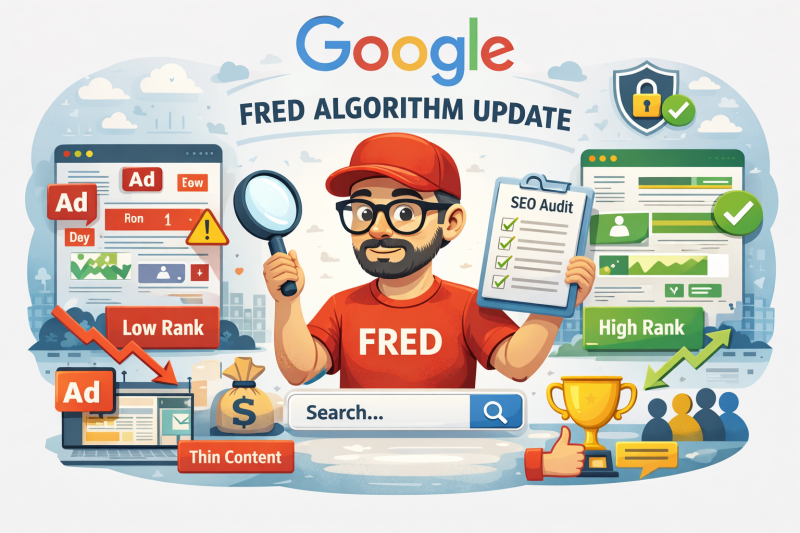
Google regularly updates its algorithm to improve search quality. In early March 2017, many website owners noticed sudden ranking drops without any official announcement. Later, Google confirmed that these changes were part of its ongoing quality updates, which the SEO community collectively named “Fred.”
Rather than a single update, Fred represents Google’s continued effort to reduce visibility for websites that prioritise monetisation over user value.
What Is the Google Fred Update?
Fred is not one standalone algorithm. Instead, it refers to broad quality-focused updates that target websites using aggressive or manipulative tactics.
Google’s goal is simple:
reward helpful, trustworthy websites and reduce rankings for pages that exist mainly to generate ad revenue.
Sites affected by Fred typically shared one common trait — they put profit before user experience.
Why Websites Were Hit by Fred
Many ranking drops during March 2017 happened because Google reassessed site quality signals. If a website relied on questionable practices, Fred exposed those weaknesses.
Common triggers included:
Excessive Advertising
Websites where ads overwhelm the main content often provide a poor experience. Google expects content to come first, not banners and pop-ups.
Thin or Low-Value Content
Pages with minimal, vague, or copied content fail to meet Google’s quality expectations. If your content does not clearly answer user questions, rankings can suffer.
Aggressive Monetisation
Sites designed primarily to push affiliate links, lead traps, or misleading calls-to-action often struggle after Fred updates.
Poor Mobile Experience
Google prioritises mobile usability. Sites that do not display or function properly on phones and tablets risk reduced visibility.
Weak User Experience (UX)
Disorganised layouts, broken links, confusing navigation, and slow loading times all signal low quality to Google.
How to Protect Your Website From Fred-Type Updates
The safest way to avoid ranking drops is to align your site with white-hat SEO best practices and focus on user value.
Follow this checklist to stay on the right side of Google:
-
Ensure content is clear, helpful, and relevant to your services
-
Expand or remove thin pages that add little value
-
Reduce ad placements so content remains the focus
-
Maintain a clean, fast, mobile-friendly website
-
Use keywords naturally and avoid keyword stuffing
-
Improve trust signals such as reviews, testimonials, and credentials
-
Clearly explain who you are and what your business offers
These actions align directly with SEO best practices and help protect long-term visibility.
Working With Google’s Quality Updates
Google does not penalise websites for honest mistakes. Instead, it rewards sites that improve over time.
If you are unsure why rankings changed, a professional SEO audit can quickly identify problem areas and guide recovery. Most Fred-related issues are fully fixable with the right strategy.
Final Thoughts on the Fred Update
Fred reinforces a message Google has repeated for years:
Build websites for people — not algorithms.
Focus on clarity, usability, and genuine value. Make your website easy to navigate, easy to understand, and genuinely helpful.
If you do that consistently, Google’s quality updates work in your favour, not against you.
Modern SEO requires far more than simply reacting to algorithm updates. Businesses today need structured SEO services in Pattaya, high-quality content, fast website performance, and accurate tracking data to maintain long-term visibility in Google Search. Google’s focus continues to move towards user experience, trust, and genuinely helpful content.
FAQs: Google Fred Algorithm Update
What is the Google Fred algorithm update?
Google Fred is an informal name given to a series of quality-focused algorithm updates rolled out in March 2017. These updates primarily targeted websites that prioritised aggressive monetisation over user value.
Why did Google introduce the Fred update?
Google introduced the Fred update to reduce the visibility of low-quality websites that relied on excessive ads, thin content, or manipulative SEO practices rather than genuinely helping users.
What types of websites were affected by Google Fred?
Websites with excessive advertising, poor content quality, aggressive affiliate tactics, weak mobile usability, or poor overall user experience were the most affected.
Is Google Fred a manual penalty?
No. Google Fred is an algorithmic update, not a manual penalty. Sites impacted were algorithmically reassessed based on quality and user experience signals.
How can I recover from a Google Fred ranking drop?
Recovery involves improving content quality, reducing intrusive ads, fixing UX issues, improving mobile performance, and aligning your SEO strategy with Google’s quality guidelines.
Does Google Fred still matter today?
Yes. Although Fred is no longer a named update, its quality principles are now embedded into Google’s core algorithm and continue to influence rankings.
Can professional SEO help protect against future Fred-style updates?
Yes. A well-structured SEO strategy focused on content quality, usability, and trust signals helps protect websites from quality-based algorithm updates.