
Google’s search results are powered by a collection of algorithms designed to evaluate relevance, quality, and trust. While many updates are discussed individually, they work together as part of a broader system that determines how pages are ranked and surfaced.
This guide explains the major Google algorithm updates in clear, practical terms. It is designed as a reference resource for anyone looking to understand how search quality is assessed and how websites can align with ethical SEO practices over the long term.

Search algorithms are automated systems used by Google to analyse web content and determine which pages best match a user’s query. These systems evaluate hundreds of signals, including relevance, content quality, usability, and trustworthiness.
Some algorithms are designed to address specific issues, such as low-quality content or manipulative link building. Others focus on understanding user intent, language, or location. Over time, many updates have become part of Google’s core ranking systems rather than standalone changes.
Understanding these algorithms helps clarify why certain SEO tactics succeed while others fail.
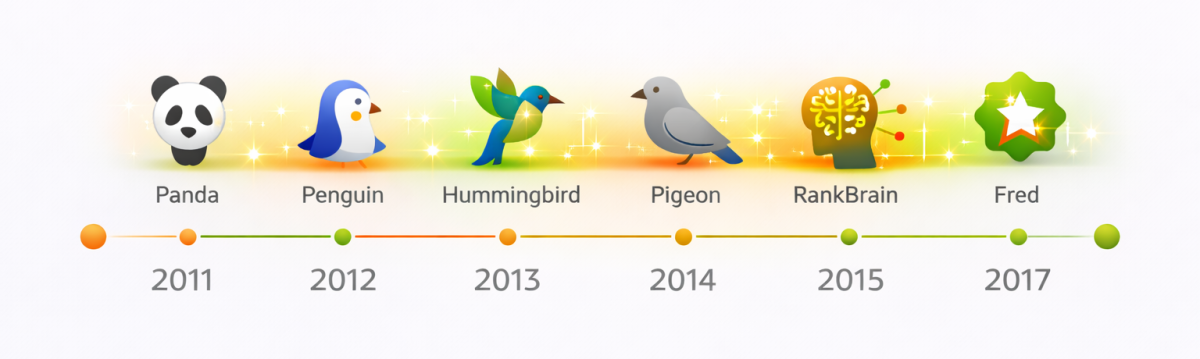
The following table summarises the most well-known Google algorithm updates and what each one targets.
| Algorithm | First Introduced | Primary Focus | Learn More |
|---|---|---|---|
| Panda | 2011 | Content quality and originality | Panda algorithm guide |
| Penguin | 2012 | Manipulative and spammy links | Penguin algorithm guide |
| Hummingbird | 2013 | Search intent and semantic understanding | Hummingbird algorithm guide |
| RankBrain | 2015 | Machine learning and query interpretation | RankBrain guide |
| Pigeon | 2014 | Local search ranking signals | Pigeon algorithm guide |
| Possum | 2016 | Local search filtering and proximity | Possum update guide |
| Fred | 2017 | Low-value and ad-heavy content | Fred algorithm update guide |
Understanding how Google’s algorithms work is one thing. Applying those principles correctly to a real website—while avoiding shortcuts—is where most businesses need guidance.
If you’d like a practical review of how your site aligns with modern search quality standards, you’re welcome to get in touch.

Google’s algorithms are not isolated switches that turn rankings on or off. Instead, they reinforce one another.
For example, content that fails quality standards may be affected by Panda-related signals, while manipulative backlinks may trigger Penguin-related evaluations. At the same time, systems like RankBrain and Hummingbird help interpret search intent and context, ensuring that results match what users are actually looking for.
Rather than penalising sites manually, Google’s systems continuously adjust rankings based on how well pages align with these combined signals.
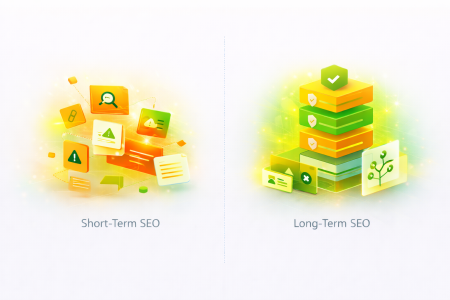
Understanding how Google’s algorithms function is not about chasing loopholes. It is about aligning websites with long-term SEO best practices for businesses.
These principles form the foundation of ethical SEO practices that focus on long-term visibility rather than short-term tactics.
Search algorithms evolve, but the principles behind sustainable SEO remain consistent. If you’re looking for clear, ethical advice tailored to your business—not generic tactics—we’re happy to discuss your goals.
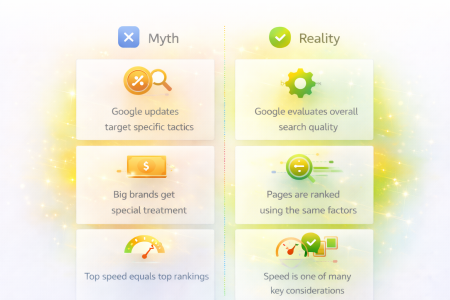
Several misconceptions persist around Google updates. Common myths include:
In reality, most ranking changes are gradual, automated, and based on accumulated signals rather than one-off actions.
Google’s algorithms consistently reward websites that prioritise users over shortcuts. Focusing on clarity, relevance, and transparency helps ensure that SEO efforts remain aligned with how modern search systems evaluate content.
Rather than reacting to individual updates, sustainable SEO is built on understanding why these algorithms exist and what they are designed to promote.
Last updated: 2026
Written by an SEO practitioner working on live client websites and long-term search performance.
Ready to transform your business? Reach out to us today for personalized digital marketing solutions and start your journey toward success!