Many small businesses hesitate when it comes to blogging. Time is limited, budgets are tight, and the idea of paying someone to write articles can feel like money disappearing with no clear return.
The reality is simpler than it sounds: blogging does help your website and online visibility – when it’s done properly.
If you’ve ever wondered whether blogging is worth the effort, what to write about, or whether anyone will even read it, you’re not alone.
Is Blogging Worth the Effort for Small Businesses?
If you run a small business, you already wear multiple hats. Writing blog content can feel like yet another task competing for attention.
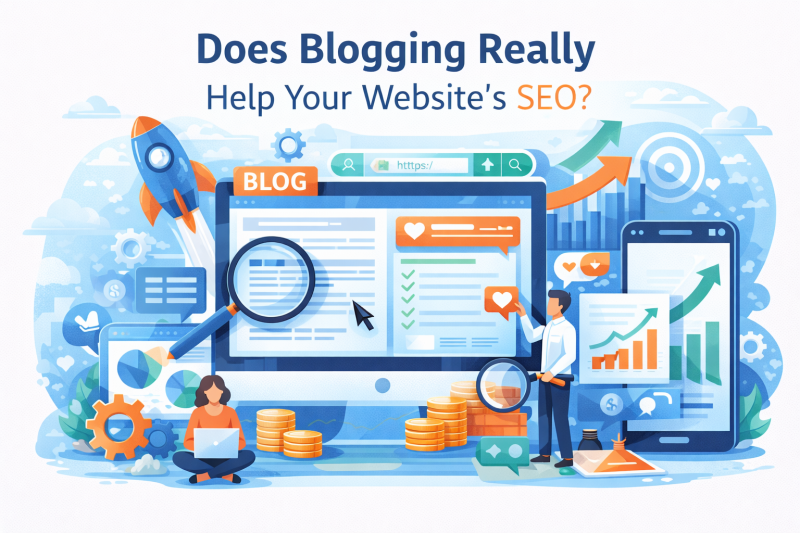
That said, blogging is one of the most effective ways to support long-term SEO without relying on paid ads. Each blog post creates another opportunity for your website to appear in search results, answer customer questions, and demonstrate expertise.
If you work alone, the decision comes down to priorities. You can write the content yourself, delegate it internally, or work with a professional. What matters most is consistency. Publishing once a year won’t move the needle – but regular, helpful content will.
If your website doesn’t already have a blog section, this is something to address as part of your professional web design strategy. A well-structured site makes content easier for users and search engines to navigate.
Should Blogging Live on Your Website or a Free Platform?
Free blogging platforms can be tempting, especially when they offer quick setup and low costs. However, publishing content away from your website means you are building traffic and authority for someone else’s platform – not your own.
When blog content lives on your website:
-
Search traffic lands directly on your domain
-
Visitors can explore your services immediately
-
Your website builds topical authority over time
If increasing visibility and enquiries is the goal, your content should always live on your own site. This is where SEO best practices really start to compound.
Blogging and Long-Tail Search Queries
Most people don’t search using short, robotic phrases anymore. Instead of typing “decorator London,” they might search for something like:
“experienced decorator who knows how to deal with damp in London”
These longer, conversational searches are known as long-tail search queries.
Blogging is one of the best ways to target them.
By writing posts that answer real customer questions – based on actual conversations, emails, or phone calls – you create content that aligns naturally with how people search. Over time, this helps your site appear for a wider range of relevant queries, not just your main service keywords.
This approach works especially well when combined with a clear SEO services strategy.
Blogging Helps Humanise Your Business
In competitive online markets, trust matters.
A blog gives potential customers insight into how you think, how you work, and what you know. It allows you to speak directly to your audience instead of relying solely on sales copy.
Well-written blog content:
-
Builds credibility
-
Demonstrates experience
-
Reduces uncertainty before contact
-
Makes your business feel approachable
This human element is particularly important for service-based businesses, where trust often matters more than price.
Fresh Content Signals Matter to Google
Search engines favour websites that stay active and relevant. Publishing new content regularly sends positive signals that your site is maintained, useful, and aligned with current user needs.
Blogging supports:
-
Improved crawl frequency
-
Better topical relevance
-
Stronger internal linking opportunities
-
Increased dwell time on site
This is why blogging works best as part of a wider SEO Pattaya strategy rather than as a one-off activity.
Final Thoughts: Is Blogging Worth It?
Blogging does require time, creativity, and commitment – but the downsides are limited when compared to the long-term benefits.
When done consistently, blogging:
-
Improves search visibility
-
Attracts qualified traffic
-
Supports SEO without ongoing ad spend
-
Builds authority and trust
The key is momentum. Publishing regularly – even once or twice a month – is far more effective than posting sporadically.
If you want your website to grow rather than stagnate, blogging is not optional – it’s foundational.
If you’d like guidance on content strategy, SEO alignment, or building a website that supports blogging properly, this ties directly into professional web design and SEO services.
Frequently Asked Questions
Does blogging really help SEO?
Yes. Blogging helps SEO by creating fresh, relevant content that search engines can index. Each blog post gives your website another opportunity to appear in search results, especially for long-tail and conversational search queries.
How does blogging improve online visibility?
Blogging increases online visibility by expanding the range of topics your website covers. When you answer common customer questions through blog posts, your site becomes more discoverable across a wider set of searches.
How often should a business blog?
For most small businesses, publishing one to four blog posts per month is enough to build momentum. Consistency matters more than volume. Regular updates signal to search engines that your website is active and relevant.
Is blogging still worth it for small businesses?
Yes. Blogging is particularly valuable for small businesses because it helps compete with larger brands by targeting niche topics, local searches, and customer-focused questions rather than broad competitive keywords.
What should I write blog posts about?
The best blog topics come from real customer questions, services you offer, and common problems your audience faces. Writing helpful, practical content builds trust and positions your business as an authority.
Does blog content need to be long to rank?
Not always. Blog posts should be as long as needed to fully answer a question. Clear, useful content that satisfies search intent performs better than long content written purely for word count.
Is it better to blog on my own website or a free platform?
Blogging on your own website is better for SEO. Publishing content on your site builds authority, supports internal linking, and keeps visitors within your business ecosystem rather than sending them elsewhere.
Can blogging help convert visitors into customers?
Yes. Blog content builds trust, demonstrates expertise, and answers objections before a visitor contacts you. This makes users more confident and increases the likelihood of enquiries and conversions.
How long does it take for blogging to show results?
Blogging is a long-term strategy. Most websites begin seeing measurable improvements in visibility and traffic within three to six months, depending on competition and consistency.
Does blogging replace other SEO work?
No. Blogging works best when combined with strong technical SEO, clear site structure, and good user experience. Together, these elements create a sustainable SEO strategy.