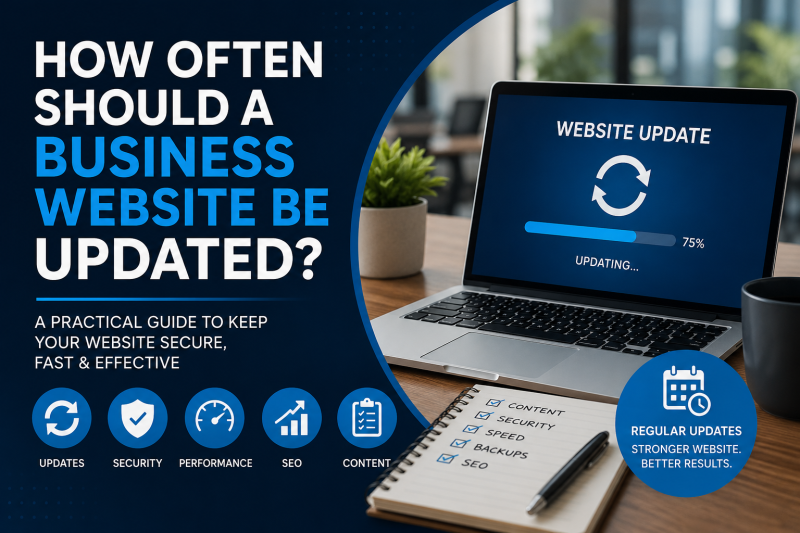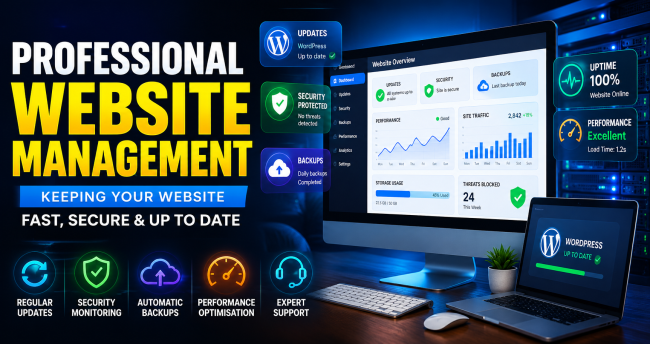
Launching a website is an important step for any business, but it is not the end of the work. Once the website is live, it still needs updates, checks, content changes, hosting support, SEO improvements, backups, and regular maintenance.
Without proper management, even a well-built website can slowly become outdated. Pages may stop matching your services, plugins can fall behind, forms can break, and hosting issues may affect performance. As a result, the website may look fine on the surface while small problems build up in the background.
This is why ongoing website management matters.
At Proactive Marketing Solutions, we provide website management in Thailand for businesses that want their website looked after properly after launch. Our support can include website updates, WordPress maintenance, hosting checks, SEO improvements, backups, speed reviews, technical support, and ongoing content changes.
For companies that need broader help, our Website Support Thailand service brings website management, hosting, SEO, WordPress maintenance, server checks, and technical support together in one place.
Why Website Management Starts After Launch
A website launch is only the beginning. At that point, the design is live, the pages are published, and the business has a platform to work from. However, the website still needs regular attention if it is going to keep supporting enquiries, trust, and search visibility.
Business details change over time. Services may expand, prices may change, team members may move, and new offers may need adding. In addition, search engines continue to crawl the website, users expect pages to load quickly, and software needs to stay updated.
Because of this, website management should be treated as an ongoing part of running the business online.
A managed website is easier to update, easier to improve, and less likely to suffer from neglected technical issues.
What Website Management Usually Includes
Website management can include different tasks depending on the size of the business and the type of website. However, the main goal is always the same: to keep the website accurate, stable, secure, visible, and useful.
A practical website management plan may include:
- Updating website content
- Editing service pages
- Adding new blog posts
- Checking contact forms
- Reviewing WordPress plugins
- Managing theme and software updates
- Checking hosting performance
- Reviewing backups
- Improving page speed
- Fixing broken links
- Updating images
- Checking SEO basics
- Reviewing Google Search Console data
- Supporting tracking and analytics
- Helping with technical issues
In many cases, website management also gives the business one reliable point of contact. Instead of asking one person about hosting, another about SEO, and another about page edits, the business can get practical support from one place.
Keeping Website Content Accurate
One of the most common problems with unmanaged websites is outdated content. A website may still show old services, old prices, outdated opening hours, missing team details, or pages that no longer reflect what the business actually offers.
This can affect trust. If a customer sees outdated information, they may wonder whether the business is still active or whether the website is being looked after properly.
Regular website management helps prevent this.
For example, service pages can be updated when the business changes. Calls to action can be improved when enquiries slow down. Images can be refreshed when the site starts to feel dated. In addition, new content can be added to support SEO and answer common customer questions.
Over time, these small updates help keep the website useful and commercially relevant.
WordPress Maintenance and Plugin Checks
Many business websites use WordPress because it is flexible, widely supported, and suitable for service pages, blogs, landing pages, and SEO work. However, WordPress websites need maintenance.
Plugins, themes, and WordPress itself are updated regularly. Some updates fix security issues, while others improve features or compatibility. Even so, updates should be handled carefully, especially on business websites that rely on contact forms, booking tools, ecommerce functions, tracking scripts, or custom layouts.
A proper WordPress management process may include checking updates, reviewing plugin use, removing unnecessary tools, checking forms, and making sure the website still works correctly after changes.
In addition, WordPress maintenance should not be treated as a blind update button. A managed approach is better because it considers how each part of the site affects performance, security, layout, and enquiries.
Hosting, Speed and Technical Support
Website management should also include attention to hosting and performance. A slow or unreliable website can affect user experience, search visibility, and customer trust.
Hosting problems can appear in several ways. The website may load slowly, go offline, struggle with traffic, show SSL warnings, or have email and DNS issues. Sometimes, the website itself is blamed when the real problem is the hosting setup.
For this reason, website management and hosting support work well together.
A managed support provider can review hosting quality, check basic speed issues, look at caching, support website transfers, review backup options, and help identify technical problems before they become bigger issues.
As a result, the business has better control over the full website setup, not just the visible pages.
SEO Needs Ongoing Website Management
SEO is not a one-time task. Search visibility depends on the quality, structure, performance, and usefulness of the website over time.
A website may launch with good page titles, clear service pages, and a basic SEO structure. However, that does not mean the work is finished. Competitors continue improving their websites. Search behaviour changes. Google discovers new pages and issues. Old content may need refreshing. Internal links may need improving.
Therefore, website management should include regular SEO attention.
This may involve updating service pages, improving headings, adding internal links, writing supporting posts, checking metadata, reviewing indexed pages, and using Google Search Console to understand how the site appears in search.
Google’s Search Central documentation explains that Search Console can help site owners monitor performance and identify search-related issues. In practical terms, this data becomes more useful when someone regularly reviews it and turns it into real website improvements.
Backups and Security Checks
Backups and security are easy to ignore when everything is working. Unfortunately, they become very important when something goes wrong.
A business website should have a sensible backup plan. It should also have basic security awareness, strong login practices, updated software, and checks for obvious problems. Although no website can be guaranteed to avoid every issue, regular management reduces risk and improves recovery options.
Website management can help with:
- Backup checks
- Plugin reviews
- Basic security checks
- Form testing
- Login awareness
- Malware concerns
- Hosting warnings
- Recovery planning
- Update monitoring
In short, backups and security checks protect the business from avoidable disruption.
Why One-Off Fixes Are Not Always Enough
Some businesses only ask for help when something breaks. That can work for small issues, but it often leads to a reactive approach.
For example, a website may only get attention when a form stops sending, a page breaks, or the site becomes slow. By that point, the issue may have been building for weeks or months.
Ongoing website management is different. Instead of waiting for problems, the website is checked, updated, and improved regularly. As a result, small issues are more likely to be caught early, and the website remains easier to manage.
For busy business owners, this is usually far more practical than dealing with disconnected emergency fixes.
Website Management for Businesses in Thailand
Businesses in Thailand often need flexible website support. Some need English-speaking communication, while others need help with websites built by previous designers. In many cases, the business needs support across several areas at once, including hosting, updates, SEO, emails, backups, and technical checks.
At Proactive Marketing Solutions, we are based in Pattaya and support businesses across Thailand and remotely. Our website management service is designed for businesses that want reliable support without being locked into confusing technical processes.
We can help businesses that need:
- Website edits and content updates
- WordPress maintenance
- Hosting support
- SEO improvements
- Backup reviews
- Server checks
- Google Search Console support
- Technical troubleshooting
- Ongoing blog and content updates
- Monthly website support
As a result, clients can keep their website moving forward without needing to manage every technical detail themselves.
When Your Business Needs Website Management
Your business may need website management if updates are being delayed, technical issues are being ignored, or nobody is clearly responsible for the website after launch.
Common signs include:
- You cannot contact your original website designer
- Website changes take too long
- Your site feels outdated
- You are unsure who manages hosting
- Forms or emails have caused problems
- Plugins have not been checked
- SEO has slowed down
- You do not know if backups are working
- Your pages no longer match your services
- You want one reliable support contact
If several of these apply, a monthly website management plan may be a better option than occasional one-off fixes.
Work With Proactive Marketing Solutions
Proactive Marketing Solutions provides website management in Thailand for businesses that need ongoing support after launch.
Our service can include website updates, WordPress maintenance, hosting checks, SEO improvements, backups, speed reviews, technical support, and practical digital improvements. In addition, we can support businesses that need broader website, hosting, and SEO support from one reliable point of contact.
We are based in Pattaya, but we work with businesses across Thailand and remote clients who need clear communication and dependable website management.
If your website is live but not being properly maintained, now is a good time to put a support plan in place.
Contact Proactive Marketing Solutions to discuss website management, hosting, SEO, and ongoing website support for your business.
Frequently Asked Questions
What is website management?
Website management is the ongoing work needed to keep a website updated, secure, reliable, and useful. It can include content updates, WordPress maintenance, hosting checks, backups, SEO improvements, form checks, and technical support.
Why does a business website need ongoing management?
A business website needs ongoing management because services, content, software, hosting, SEO, and technical requirements change over time. Without regular checks, small issues can build up and affect performance, enquiries, and trust.
Does website management include WordPress maintenance?
Yes, website management can include WordPress maintenance. This may involve plugin checks, theme updates, WordPress updates, form testing, backup reviews, security awareness, and troubleshooting.
Can website management help with SEO?
Yes. Website management can support SEO by improving service pages, updating metadata, checking internal links, reviewing Google Search Console data, refreshing content, and fixing basic technical issues.
Do you provide website management outside Pattaya?
Yes. Proactive Marketing Solutions is based in Pattaya, but we support businesses across Thailand and remote clients. We can help businesses in Pattaya, Bangkok, Phuket, Chiang Mai, Rayong, Hua Hin, and other locations.
How much does website management cost in Thailand?
The cost depends on the size of the website and the level of support needed. At Proactive Marketing Solutions, monthly website support plans start from ฿5,000/month, with tailored options available for larger websites, managed hosting, SEO campaigns, and regular technical support.
Can you manage a website built by someone else?
Yes. We can review websites built by another company and check the website setup, hosting, plugins, access, backups, and technical structure before recommending the right support plan.
Google’s Search Central documentation explains that Search Console can help site owners monitor performance and identify search-related issues.