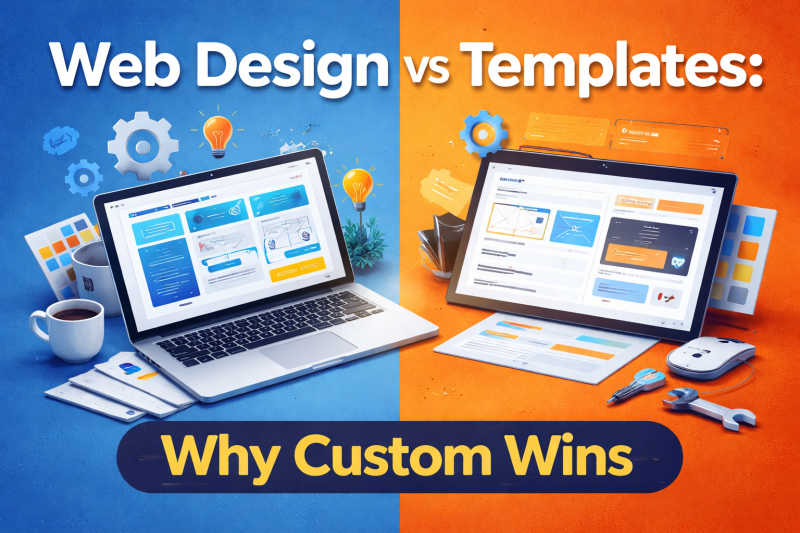
Choosing how your website is built is one of the most important digital decisions your business will make. While website templates promise speed and low upfront costs, custom web design offers long-term value, flexibility, and performance that templates rarely deliver.
For businesses in competitive markets like Pattaya — and for growing SMEs everywhere — the difference between a template site and a custom-built website often determines whether a site simply exists or actually generates enquiries, leads, and sales.
This article breaks down the real differences between template-based websites and custom web design, so you can make an informed decision based on outcomes, not marketing promises.
What Is a Template Website?
A template website is built using a pre-designed layout where structure, styling, and functionality are largely fixed. Platforms such as Wix, Squarespace, Shopify themes, or pre-built WordPress themes fall into this category.
Templates are designed to appeal to a broad audience, which means they aim to work “well enough” for many businesses — but rarely perfectly for any one business.
They are often chosen because they:
- Appear cheaper upfront
- Can be launched quickly
- Require minimal technical knowledge
However, these benefits come with trade-offs that are not always obvious at the start.
What Is Custom Web Design?
Custom web design means your website is designed and built specifically for your business, goals, audience, and market.
Instead of forcing your content into a pre-built layout, the design is structured around:
- Your services or products
- Your customer journey
- Your SEO strategy
- Your conversion goals
Custom websites are not about visual flair alone. They are about performance, clarity, and scalability.
The Key Differences That Matter in Practice
1. Flexibility vs Limitations
Templates come with built-in constraints. Layouts, page structures, and features are often locked behind theme logic or platform restrictions. As your business grows, these limitations become more noticeable.
Custom websites, by contrast, are built to evolve. Pages, features, and integrations can be added or adjusted without fighting against a rigid framework.
This flexibility becomes essential when:
- You expand services
- You target new locations or languages
- You introduce booking systems, eCommerce, or automation
2. Performance and Website Speed
Templates often include features you do not need — sliders, animations, scripts, and plugins that load regardless of whether they add value. This leads to slower load times and inconsistent performance.
Custom web design allows performance to be engineered from the start:
- Cleaner code
- Purpose-driven layouts
- Optimised assets
- Fewer unnecessary scripts
Speed directly affects user experience, SEO visibility, and conversion rates, especially on mobile devices.
3. SEO Structure and Search Visibility
Templates are built to be generic. While many advertise “SEO-friendly” features, they rarely align with a specific keyword strategy or content structure.
Custom web design supports SEO by:
- Structuring pages around search intent
- Controlling heading hierarchy properly
- Supporting internal linking strategies
- Avoiding bloated code that hinders crawling
For businesses targeting competitive local searches, such as service-based companies in Pattaya, this structural advantage is significant. It is one of the reasons professional web design Pattaya services consistently outperform template sites over time.
4. Branding and Trust
Templates are widely used. Visitors often recognise them, even subconsciously. This can reduce perceived credibility, especially in service-based industries where trust is critical.
Custom websites reinforce trust by:
- Matching design to brand positioning
- Creating consistency across pages
- Removing visual clutter and distractions
When a website feels intentional and well-structured, visitors are more likely to believe the business behind it is professional and reliable.
5. Conversion-Focused Design
Templates are designed to look acceptable, not to convert for your specific audience.
Custom web design focuses on:
- Clear user journeys
- Logical content flow
- Strategic call-to-action placement
- Reducing friction at decision points
Small design choices — spacing, layout order, mobile behaviour — can dramatically affect whether users take action or leave.
When Templates Can Make Sense
Templates are not always the wrong choice. They can work for:
- Very early-stage projects
- Temporary campaigns
- Simple one-page informational sites
However, they should be seen as a short-term solution, not a foundation for growth.
Once a business relies on its website for enquiries, bookings, or sales, the limitations of templates become a barrier rather than a benefit.
Why Custom Web Design Wins Long-Term
Custom websites are an investment rather than a shortcut. While the initial cost is higher, the return is typically stronger due to:
- Better search visibility
- Higher conversion rates
- Easier scalability
- Reduced need for rebuilds later
For businesses serious about growth — locally or nationally — custom web design consistently outperforms templates over time.
Final Thoughts
The real question is not “Which is cheaper?” but “Which supports my business goals?”
Templates prioritise speed to launch.
Custom web design prioritises performance, visibility, and results.
If your website is expected to attract traffic, build trust, and generate leads, custom web design is not a luxury — it is a competitive advantage.
Frequently Asked Questions About Custom Web Design vs Templates
Is a custom website always better than a template?
Custom websites are better when a business relies on its website for leads, SEO visibility, or growth. Templates can work short-term but often limit performance and scalability.
Are template websites bad for SEO?
Templates are not inherently bad for SEO, but they often include bloated code and fixed structures that make optimisation more difficult compared to custom-built websites.
Why do custom websites cost more than templates?
Custom websites require planning, design, and development tailored to a business’s goals, which delivers better performance, flexibility, and long-term value.
Can a template website be converted into a custom site later?
Yes, but in many cases rebuilding from scratch is more efficient than trying to adapt a rigid template structure.