
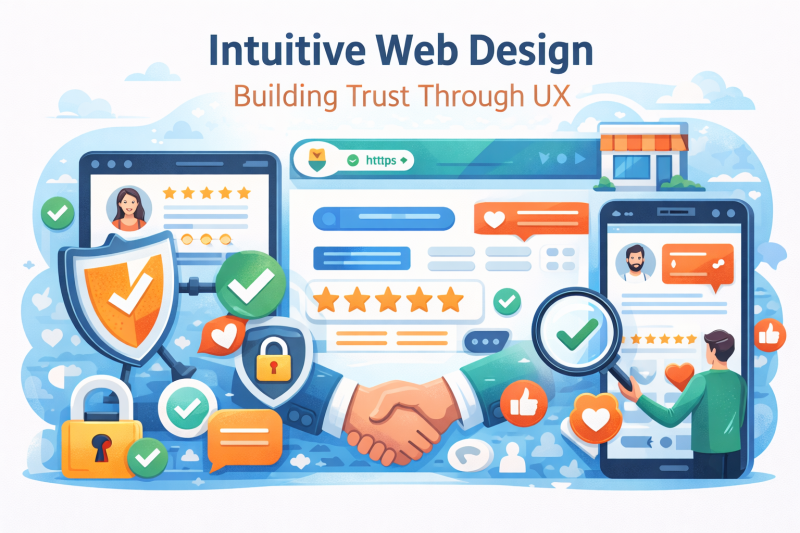
Intuitive web design is not about following trends or adding visual effects. At its core, it is about trust. When visitors arrive on a website, they make an almost instant judgement about whether they feel confident enough to stay, explore, and engage.
If that sense of confidence is missing, no amount of traffic, advertising, or promotion will convert. For businesses — especially service-based ones — intuitive design plays a direct role in credibility, enquiries, and long-term growth.
What Is Intuitive Web Design?
Intuitive web design means visitors can use a website without having to think about it. Navigation feels natural, content is easy to understand, and pages behave exactly as users expect.
At its foundation, intuitive design combines:
- Clear structure and layout
- Logical navigation
- Strong user experience (UX) principles
- Honest, consistent messaging
When users immediately understand where they are and what to do next, trust develops naturally.
Why Trust Matters More Online Than Offline
Physical businesses benefit from real-world trust signals such as staff interaction, cleanliness, and atmosphere. Online, those signals are replaced by design and usability cues.
Visitors judge trust based on:
- Overall design quality
- Page speed and responsiveness
- Consistency between promises and content
- Ease of navigation
- Transparency and clarity
If a website feels cluttered, outdated, or confusing, visitors subconsciously question the reliability of the business behind it.
This is why trust and web design are closely linked.
Viewing Your Website Through a Visitor’s Eyes
One of the most effective ways to assess intuitive design is to view a website as if you were visiting it for the first time.
Ask simple questions:
- Is it immediately clear what this business does?
- Does the design reflect professionalism and credibility?
- Is the site easy to use on mobile devices?
- Does anything feel confusing, broken, or misleading?
If the answers are uncertain, visitors are likely experiencing the same hesitation.
How Intuitive Design Reduces Bounce Rates
Websites that feel intuitive encourage users to explore rather than leave. When navigation is clear and content flows logically:
- Visitors view more than one page
- Time spent on the site increases
- Bounce rates decrease
- Conversions become more likely
Confusing layouts, slow loading pages, and mismatched content create friction. Search engines observe this behaviour and interpret it as a quality signal, which can influence search visibility.
Good user experience benefits both visitors and search performance.
Design Choices That Build Trust
Small design decisions often have the greatest psychological impact. Trust grows when visitors feel informed, comfortable, and in control.
Effective trust-building elements include:
- Clear navigation and page hierarchy
- Fast, responsive loading times
- Headlines that accurately reflect content
- Clean, readable layouts
- Easy access to contact information
- Minimal and sensible data requests
Asking for too much information too early can create suspicion and reduce engagement.
Aligning Design and SEO Honestly
Trust can be damaged quickly when search results promise one thing and the page delivers something else. Intuitive design works best when SEO and content are aligned honestly.
This means:
- Keywords accurately reflect real services
- Headlines match user intent
- Content answers genuine visitor questions
When design, content, and optimisation work together transparently, both trust and rankings improve.
This alignment is a core principle of effective web design in Pattaya, where visitors often compare multiple local businesses before making contact.
Why Social Proof Reinforces Trust
Design does not exist in isolation. Visitors often look for confirmation that others trust a business as well.
Common trust signals include:
- Customer reviews and testimonials
- Consistent branding across platforms
- Active and credible social media presence
A website that connects clearly to a wider digital presence feels more established and reliable.
Final Thoughts on Intuitive Web Design
Intuitive web design is not about clever techniques or visual tricks. It is about removing friction.
The less effort a visitor needs to make, the more likely they are to stay longer, explore deeper, and make contact. A well-designed website should never feel like a puzzle — it should feel natural, honest, and reassuring.
That sense of ease is what builds trust and supports meaningful engagement over time.
Intuitive Web Design FAQs
What is intuitive web design?
Intuitive web design is when your website feels easy to use without visitors having to “think” about where to click next. It relies on clear structure, familiar patterns, fast load times, and content that matches what the user expected to find.
Why is trust so important on a business website?
Because visitors cannot “see” your business in person, your website must prove reliability quickly. Trust signals help people feel confident enough to enquire, call, or buy.
What are the most effective trust signals to add to a website?
The strongest trust signals typically include real customer reviews, clear contact information, visible social profiles, a secure HTTPS site, clear service pages, and transparent policies (privacy, refunds, terms where relevant).
How fast do visitors decide whether to stay on a website?
Most visitors decide very quickly. If the site looks unclear, slow, or mismatched to what they searched for, they will often leave without visiting another page.
How does trust affect Google rankings?
Google aims to rank pages that provide a good experience and appear credible. Strong UX, clear purpose, honest messaging, and supporting “proof” elements (reviews, consistent business details) can reinforce trust and improve performance over time.
Does social media help build trust for my website?
Yes. Active, consistent social media presence can reinforce legitimacy—especially when your profiles are linked from your site and show real engagement, updates, and customer feedback.
What are common trust mistakes that reduce enquiries?
Common issues include hiding contact details, asking for too much information too soon, weak or outdated design, broken pages, slow load speeds, and content that promises something the page doesn’t deliver.
Should I link this post to my Web Design Pattaya service page?
Yes. This post supports your service page well because it explains user trust and UX—both core reasons people invest in professional web design.